



All dogs express different personality traits and behavioral patterns in the same way humans do. The majority of dogs display several recurring behaviors that remain difficult to understand.
Head Tilting and Tail Chasing
Dogs usually tilt their heads when they encounter unfamiliar sounds or things they do not understand. The action provides dogs with better visual and auditory perception but continuous head tilting could suggest health problems that include ear infections. Tail chasing represents a playful canine behavior which sometimes reveals underlying medical or behavioral conditions including skin disorders and obsessive-compulsive tendencies.
Coprophagia and Scooting
Many dogs engage in the unpleasant behavior of consuming feces which is known as coprophagia. The eating of feces occurs for instinctual reasons as well as due to nutritional deficiencies and stress levels and medical problems. Dogs who drag their rear ends on the ground typically have anal gland issues or experience gland irritation.
Vocalizations and Licking
Dogs use barking and howling and baying as natural methods to interact with their environment. Dogs bark as a normal form of communication yet too much barking can indicate their need for attention or their state of being bored. Dogs show affection through licking and use it to draw attention to themselves.
Humping and Sniffing
The habit of humping primarily serves as an expression of play or excitement rather than as a sexual behavior. Dogs use their strong sense of smell to obtain information about the gender and dietary habits and other characteristics of another dog through the act of sniffing each other’s butts.
Digging and Leaning
Dogs start digging because they experience either boredom or anxiety or require cooling relief. A dog leans against people as a demonstration of affection because they want physical closeness.
Learn more about designing the perfect indoor and outdoor space for your dog to support their well-being and reduce such behaviors
Panting and Hyperactivity
Normal panting functions as a cooling system for dogs but this behavior may signal either stress or medical problems. Excessive dog activity arises from combinations of fear factors and insufficient physical activity and overwhelming environmental stimulation. A dog needs both safety and balance to maintain their overall wellness.
The Dog-Human Connection: Ensuring a Happy, Balanced Canine Companion
Dogs served as working animals until humans began keeping them as pets after thousands of years of companionship. The evolutionary transition demonstrates how essential it is to grasp canine requirements and natural actions for building proper relationships.
To explore effective ways of deepening this connection, read our guide on Building a Strong Bond with your Dog
Emotional Understanding
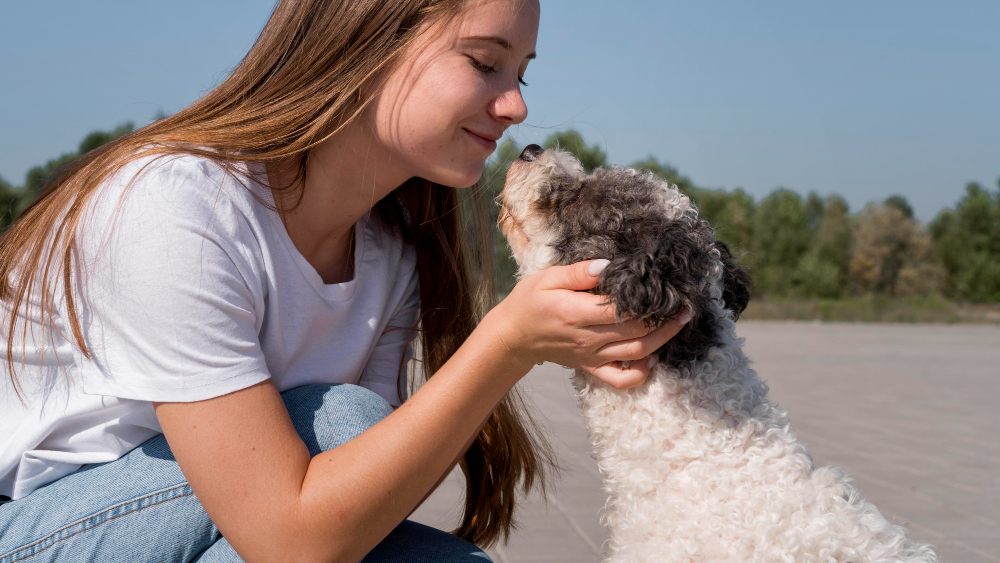
Dogs possess emotions which resemble human feelings such as love together with grief and empathy. Dogs understand human emotions by analyzing facial expressions along with scents and body movements. Our emotional state requires proper control because it affects our dogs directly.
The 5 to Thrive Framework
The framework enables people to understand and answer dog needs to create an environment where dogs feel secure and understood. The approach focuses on honoring personal boundaries and maintaining safety rather than forcing strict training protocols to develop positive relationships with dogs.
Key Areas for Well-Being
Patience and Self-Control: Help dogs develop these traits for better behavior and interaction.
Communication: Understand their body language and respond appropriately.
Embrace Natural Instincts: Dogs should be able to follow their natural behaviors along with instincts free from the constraints of human standards.
Support and Safety: Dogs need to feel protected and cared for in every circumstance.
Love and Empathy: Provide steady affection and comprehend their evolving requirements as they grow and mature.
Managing Common Behavior Problems
Barking: Understand the reason behind the bark and address underlying issues.
Hyperactivity: Balance exercise and mental stimulation to prevent hyperactive behavior. Try these Interactive Games and Activities to Keep your Dog Entertained
Recall and Lead Pulling: Establish a strong connection and practice controlled recall to prevent issues.
Separation Anxiety: Gradually acclimate dogs to being alone, using positive reinforcement.
Jumping Up: Encourage calm behavior and manage excitement levels.
Understanding Puppy Behavior
The proper development of well-adjusted adult dogs requires both patience and guidance from their owners. Apply the ‘Five to Thrive’ framework to help your puppy grow properly while teaching them appropriate choices about their surroundings.
Your efforts to understand these factors will result in a thriving dog relationship that develops through trust and mutual respect between you and your pet.